
Two forms, one blue
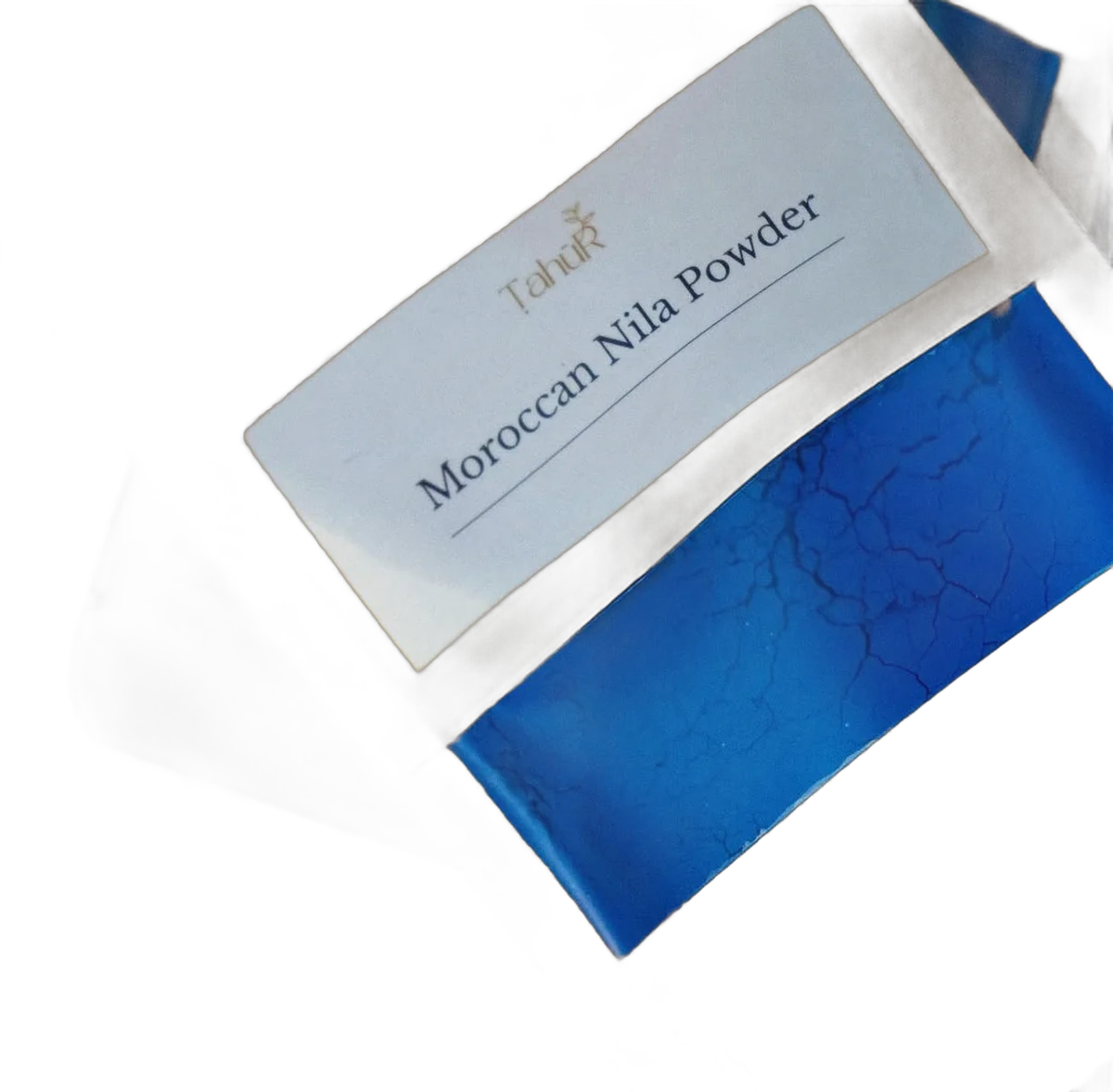
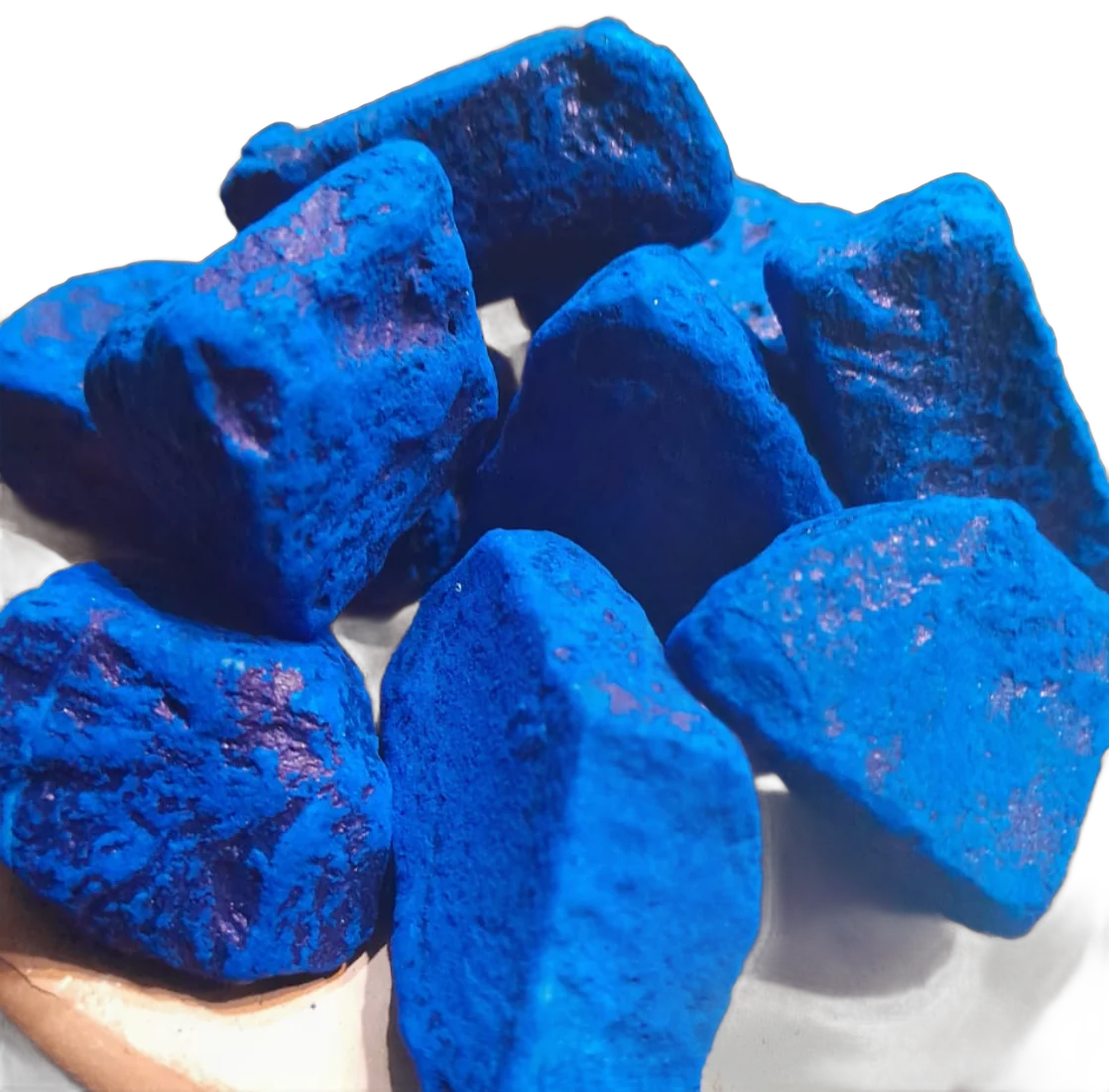
Nila comes two ways. The stone is a lump you grind yourself, with a pestle and mortar and gloves on. The powder is ready to mix. Either way it ends in the same place: a small amount stirred into plain natural yoghurt until it is an even blue, spread on as a mask, and wiped away fifteen minutes later.
In Morocco it belongs to the beauty tradition around the hammam. One Moroccan outlet, Yabiladi, describes it mixed with black soap in the hammam and left for ten to fifteen minutes. Our routine keeps it apart from the soap, as a mask of its own, once a week.
What sellers disagree about
Ask three sellers what Nila is made from and you may get three answers. Yabiladi describes a plant powder grown mainly in the Souss. A French health site and an Indian men's magazine call it a mineral pigment. A dermatologist writing in ThePrint in June 2026 said many powders sold as Nila are pigment-heavy, and that some contain added pigments or undisclosed additives.
No home test settles it. The checks sellers suggest, such as stirring it into a glass of water, only hint; a laboratory is the only way to know what is in a jar. So we do not say what Nila is until the supplier proves it, and its certificate is one of the questions we ask every supplier.
The mask, step by step
This is the routine on the card in every parcel. Read it through once before you open the jar, and have everything on the side before you start.
Step 1: Yoghurt
Plain natural yoghurt in a bowl.
Step 2: Nila
Grind a piece of stone to a fine powder, or use the ready-ground powder. Gloves on.
Step 3: Mix
A small amount of Nila into the yoghurt until it is an even blue.
Step 4: Apply
To the face or body as a mask. Leave it 15 minutes.
Step 5: Remove
Wipe it away, then rinse with lukewarm water. Rinse the sink straight after.
Step 6: Tone
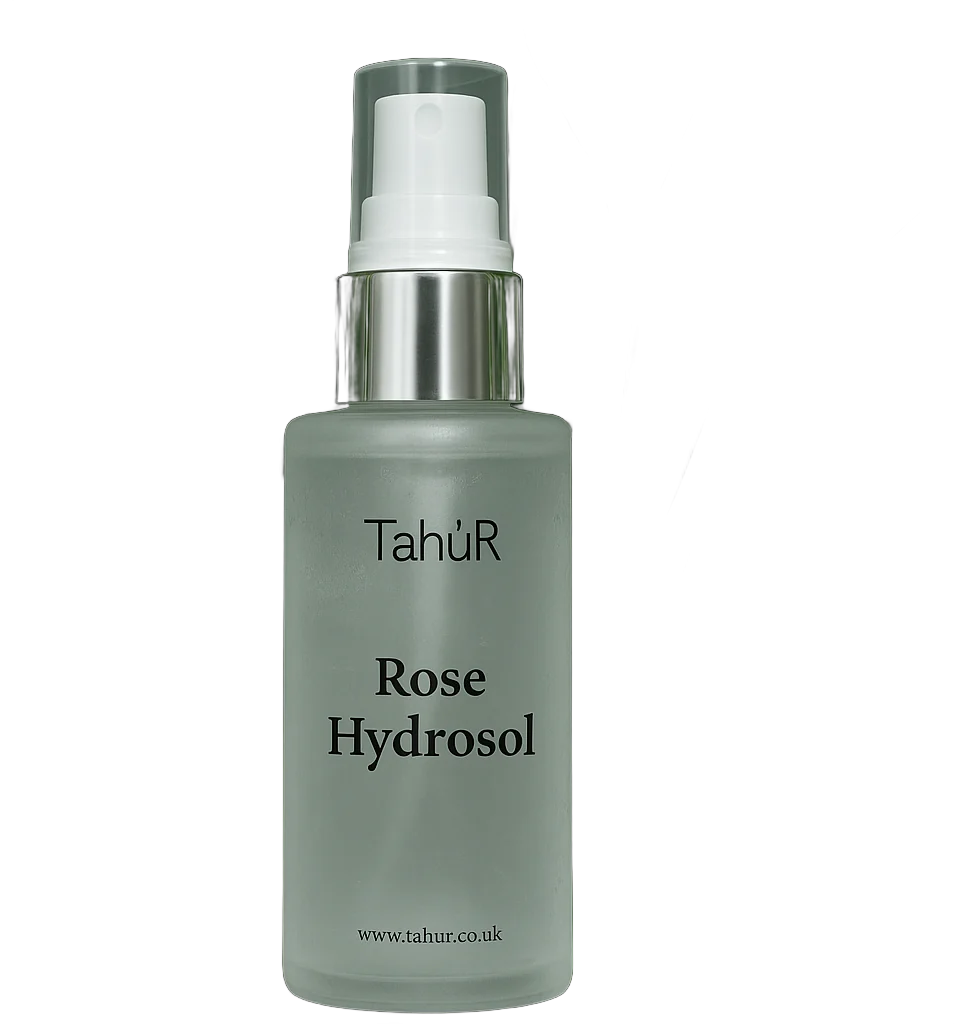
Rose hydrosol.
Step 7: Glow
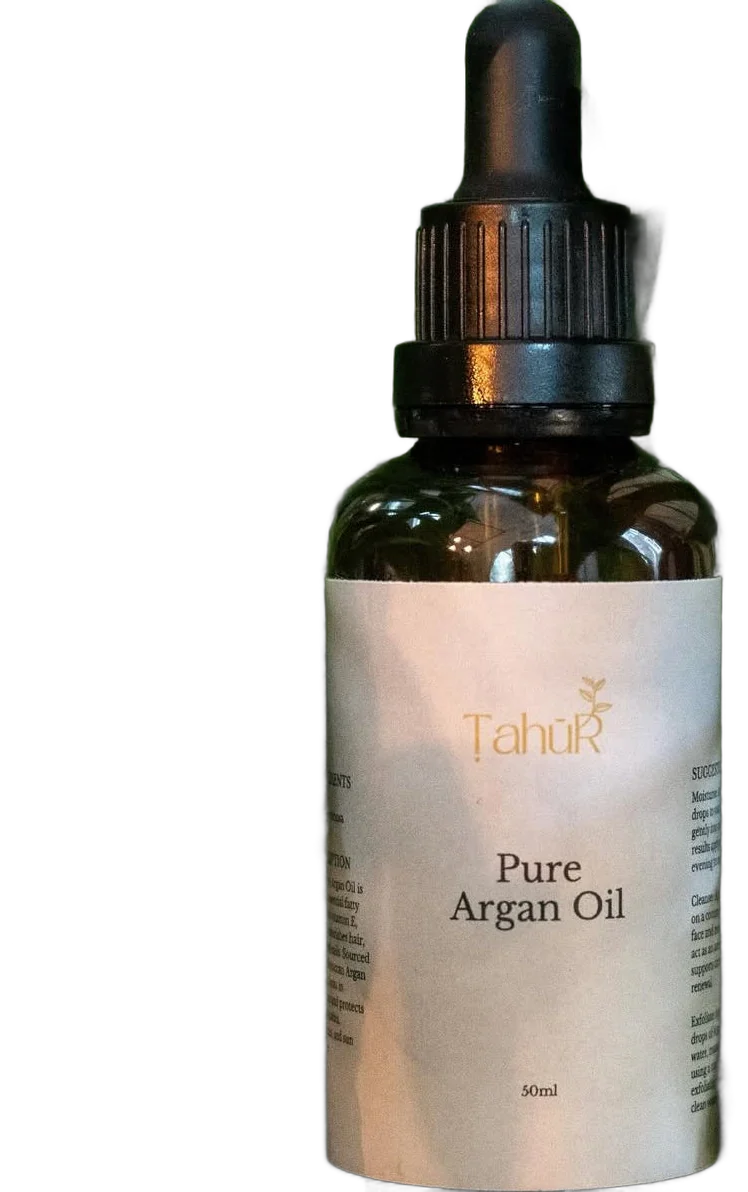
Argan oil into damp skin.
A small amount of Nila into the yoghurt until it is an even blue.
Where it goes in the week
Once a week is the hammam's rhythm. On a mask week the mask goes after the soap and the glove, once the skin is rinsed, and before the rose hydrosol and the argan oil.
Patch test on the inner arm first. Keep it off the eyes and broken skin, and leave it out on any week your skin feels sore.
Before you open the jar
Nila marks what it touches if it is left to dry: the sink, the bath, the towels. A minute of setting up saves the clean-up.
Nila stains. Treat it with respect.
- Gloves on before you grind or mix.
- Cover the sink and the worktop, or work in the bath.
- Rinse the bowl, the sink and your hands straight away. It marks ceramic, enamel and cloth if it dries.
- It can tint skin for a day or two if it is left on thick.
What the research found
We looked, and we found no published clinical study of Nila on skin. We say so on every Nila page. The one European safety opinion in our sources is about a plant powder used as a hair dye, which is a different use from a mask on the skin.
Nila
Measured
The blue powder of the hammam. What it is made from varies between sellers, and its certificate is one of the questions we ask every supplier. We found no published clinical study of Nila on skin. It stains, so treat it with respect.
Not claimed
We do not say brightens, evens tone, mineral, clay, or natural. We do not say what it is until the supplier proves it.