
A soap that stays soft
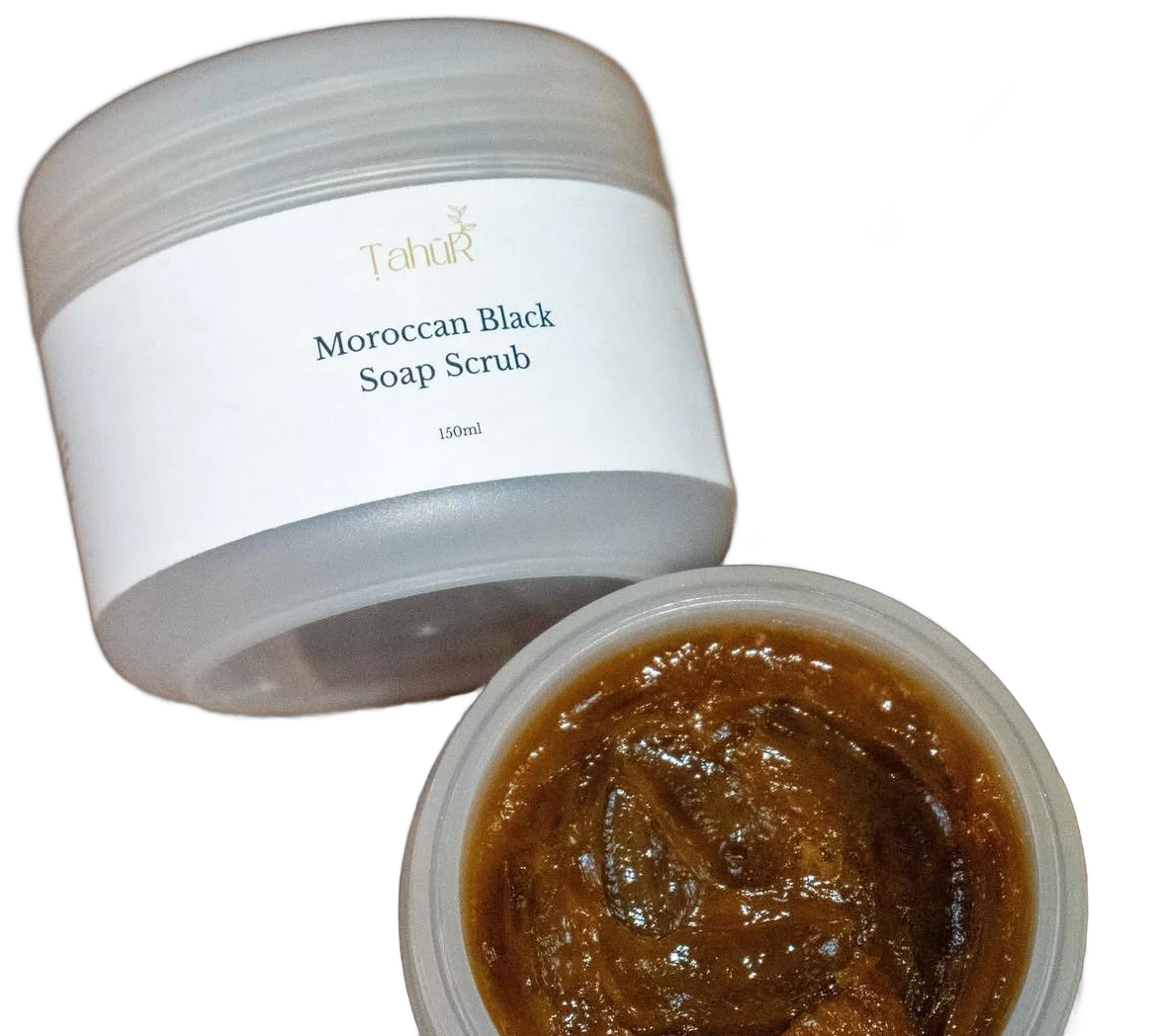
Moroccan black soap, savon beldi, is a soft potash soap: oils made into soap with potassium hydroxide, where an ordinary hard bar uses sodium. Potassium soaps set soft, which is why it comes as a paste: buttery, gel-like, dark green to black, with little lather. Beldi means traditional. One Moroccan beldi soap lists only water, potassium hydroxide and olive.
It is not African black soap, which is a West African soap made with plant ash and oils. Different soap, different tradition.
Why it sits on the skin
In the hammam the soap goes onto warm, damp skin and stays there. Our card says five to ten minutes. Tradition says the wait readies the skin for the glove. That is tradition, not a study: we found no published study of black soap itself.
What the chemistry does say is plain. Like every soap it is alkaline, typically pH 8.5 to 11 against skin at 4.0 to 6.0. So a thin layer, then rinse well and finish with the oil.
-
Step 2: Soap
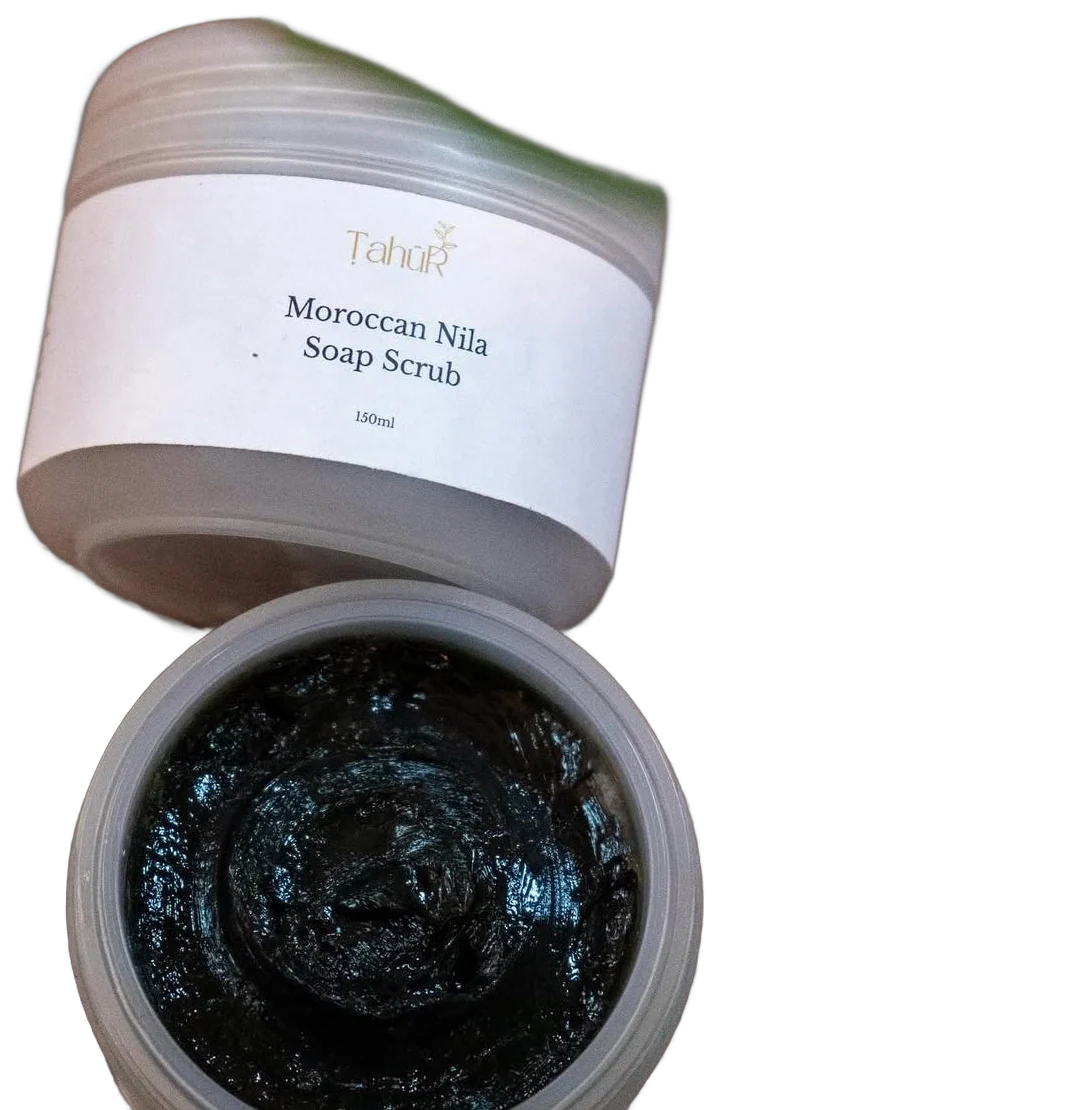
A thin layer of black soap scrub, or Nila soap scrub, over damp skin. Leave it on.
Thin is right. A little goes a long way.
The glove
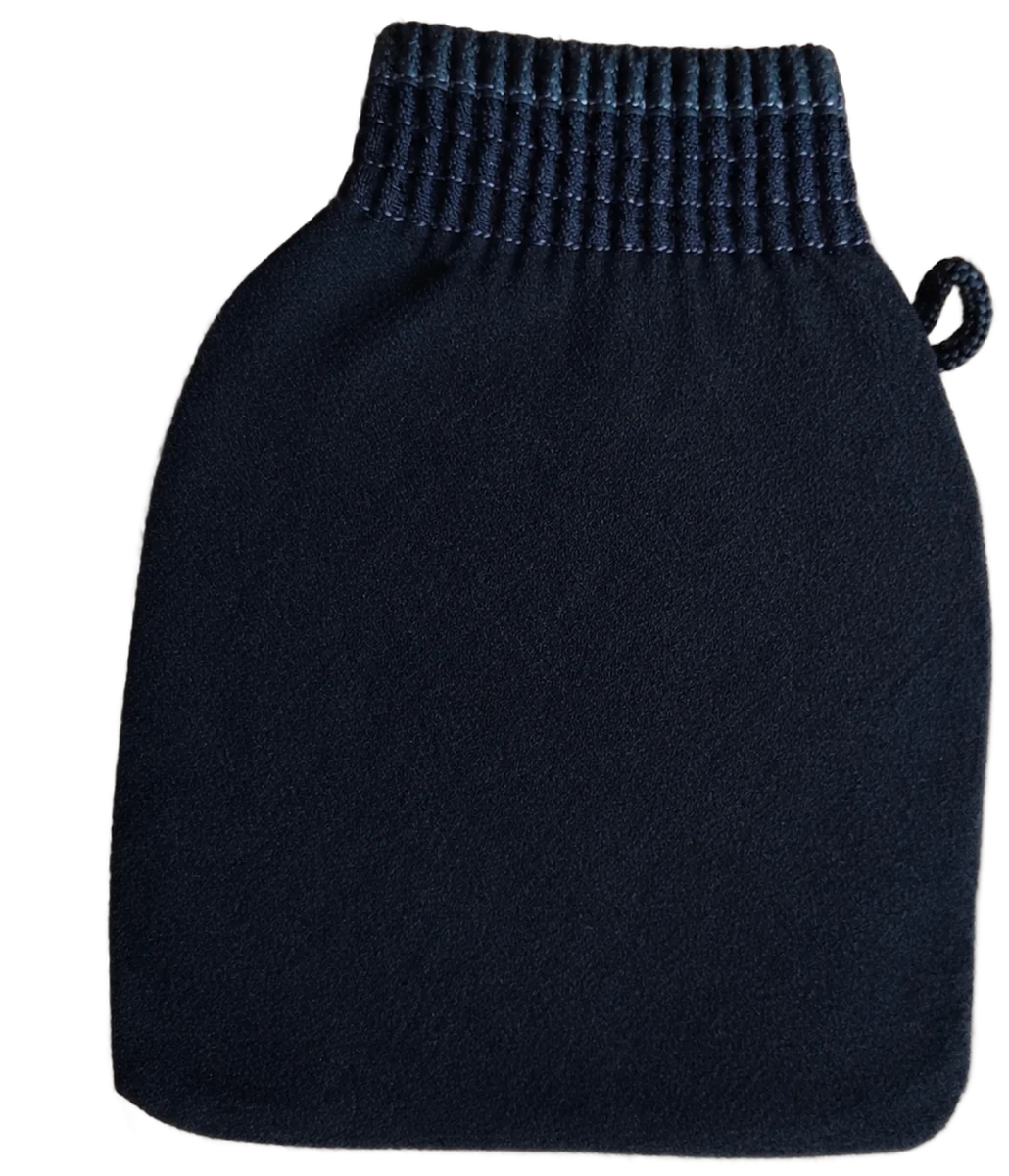
The kessa is a rough mitt for rubbing loose, dead skin from the surface after the steam and the soap. Most sold today are viscose crepe; older ones were goat or horsehair. It works on skin that is soft and damp, which is why it comes third in the ritual, never first.
Soak the glove in warm water first. Rinse the soap away, then work one area at a time in sweeping strokes. Not on the face, and not on broken or irritated skin.
-
Step 3: Exfoliate
Rinse, then the kessa glove in firm sweeping strokes, one area at a time.
How hard to press: lightly
The card says firm sweeping strokes and light pressure, and both are right: the stroke is steady, the hand is light.
Light pressure. The glove does the work.
The reason to go lightly is the one piece of research we found. In an online survey of 160 hammam users in Tangier, published in 2025, about three in four said their skin was irritated after the rubbing. It was self-reported, not a trial. It is still a good reason to go lightly, and to stop if your skin stings or reddens.
Once a week, and the glove after
Once a week is the hammam's rhythm. After each use, rinse the glove, wring it out and hang it to dry. Replace it when it thins, frays or smells musty.
What the research measured
Black soap
Measured
A soft Moroccan potash soap, traditionally used before the glove. Like every soap it is alkaline, so rinse well and finish with the oil. We found no published study of black soap itself.
Not claimed
We do not say gentle, pH balanced, purifying or for sensitive skin.
The kessa
Measured
A rough mitt for rubbing loose, dead skin from the surface after steam and soap. We found no clinical study of the glove. One survey of 160 hammam users in Tangier found most reported some irritation after hard rubbing, so go lightly.
Not claimed
We do not say deep exfoliation, removes toxins, renews or regenerates.