
The tree of the south west
The argan tree, Argania spinosa, grows in the south west of Morocco, around the Souss plain, in what is now the Arganeraie Biosphere Reserve. The oil is pressed from its kernels.
In 2014 UNESCO inscribed the know-how of argan, naming the women who pass it from mother to daughter and the cooperatives they work in. The first women's cooperative, Amal, opened in 1996. Cooperatives have their critics too: some say little of the money reaches the women. So we do not claim a cooperative for our bottle until the supplier's paperwork names one.
Two oils from one kernel
Oil for the skin is pressed from unroasted kernels: pale, with very little scent. Oil for the kitchen comes from roasted kernels, darker and nutty. Because argan oil is valued, it is also a target for mixing with cheaper oils, which is why the supplier's analysis matters.
What two studies measured
Each study followed 60 postmenopausal women for 60 days, with argan oil on one forearm. The first measured water loss through the skin and the water in its surface layer; the second measured elasticity. Both reported improvements on the oiled forearm. They were small, open-label studies of the researchers' own oil, not ours, and not on the face. Whether the two papers describe one trial or two is not clear from what we read.
Argan oil
Measured
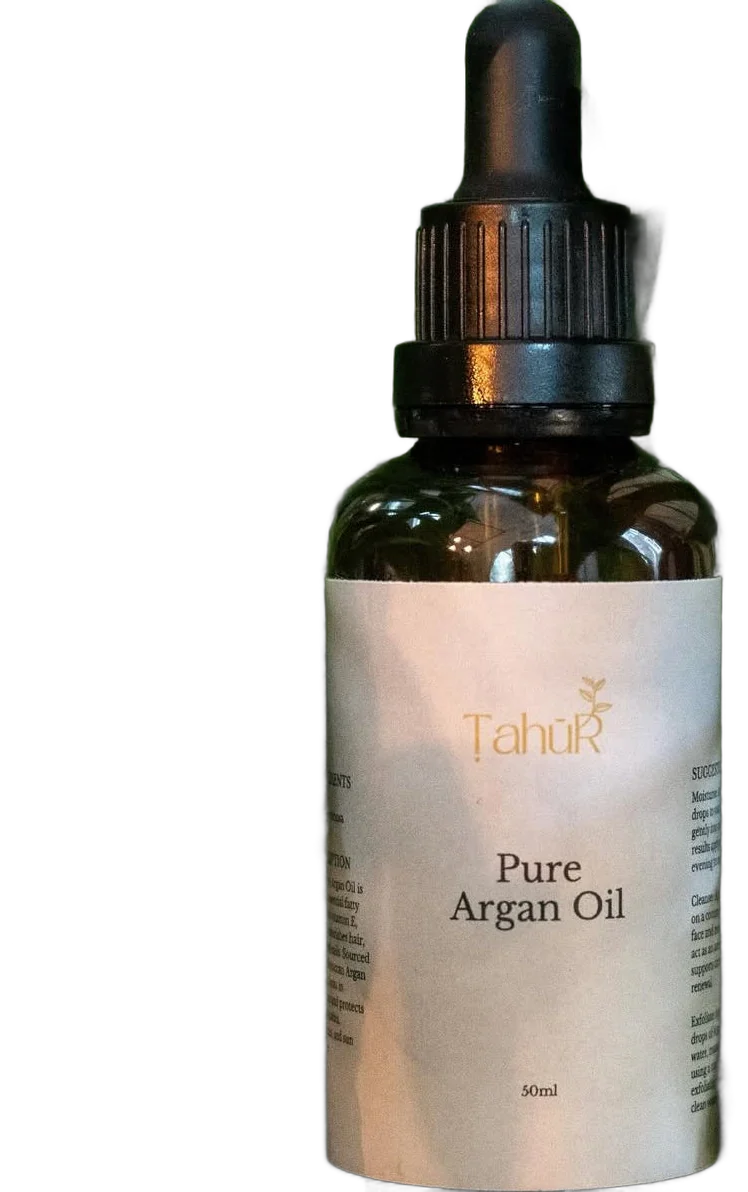
Pressed from the kernels of the argan tree of south-west Morocco. In two 60-day studies of 60 postmenopausal women, researchers measured water loss and elasticity of the skin on the forearm and reported improvements. They tested their own oil, not ours.
Not claimed
We do not say anti-ageing, collagen, or clinically proven. The studies were small, on one forearm, and not on this bottle.
How to use it
In the ritual it is step five, the last thing on the skin, while it is still slightly damp.
Warm a few drops in your palms.
Press into slightly damp skin after the hydrosol.
Face, body, or the ends of the hair.
Warm the drops in your palms first.
Questions people ask
Is it the oil you eat? No. Oil for the skin comes from unroasted kernels; the darker, nutty kitchen oil comes from roasted ones. Use this one on the skin and hair only.
How much? Two or three drops, warmed in the palms, pressed into slightly damp skin.
Can it go anywhere else? A few drops through the ends of the hair, or a drop rubbed into the cuticles.
I react to nuts. Can I use it? Reactions to argan oil are rare, but they have been reported. Ask your doctor first and patch test with care.
Good to know
Patch test first. Argan is pressed from a kernel: if you react to nuts, patch test with care. Keep it out of the eyes.